
Planning a project that takes several days is not just about having enough workers and materials. You also need the right equipment at the right time. Renting machines without a proper schedule can lead to wasted rental days, project delays, and extra expenses.
Whether you are preparing a property, building a patio, working on landscaping, or completing a construction job, planning your equipment needs ahead of time can make the entire process easier.
A mini excavator rental can help with digging and ground preparation, while other machines may be needed for moving materials, leveling surfaces, or finishing the job. The key is knowing what you need, when you need it, and how long you will use it.
Here are some practical ways to organize equipment rentals for a multi-day project without making the process complicated.
1. Understand Your Project Before Renting Equipment
Before choosing any machine, take some time to understand the work involved. A project that looks simple at first may include several different tasks that require different types of equipment.
For example, preparing a backyard for a new patio might involve removing soil, moving gravel, leveling the ground, and grinding an existing concrete surface.
Trying to complete every task with one machine may slow things down.
Break the Project Into Smaller Tasks
Start by making a list of everything that needs to be completed. Divide the project into smaller stages so you can identify the equipment required for each one.
A basic landscaping or property improvement project might include:
- Removing unwanted soil and debris.
- Digging holes or trenches.
- Moving dirt, gravel, and other materials.
- Leveling the working area.
- Preparing concrete or other surfaces.
- Cleaning up the property.
Once you have this list, it becomes easier to decide which equipment you should rent and when.
Estimate How Long Each Task Will Take
Do not plan your rental schedule around perfect working conditions. Some tasks take longer than expected because of difficult soil, limited access, weather, or a shortage of materials.
Give yourself some extra time between major stages. This small adjustment can prevent you from rushing through important work.
2. Choose Equipment That Matches Each Project Stage
Choosing the right equipment is one of the most important parts of rental planning. A machine that works well on a large construction site may not be suitable for a smaller residential property.
Think about the size of your work area, the type of material you are handling, and the amount of work that needs to be completed.
Match Equipment to the Type of Work
Different machines serve different purposes. Choosing equipment based on the actual job can help you finish tasks faster and avoid unnecessary rental expenses.
For example:
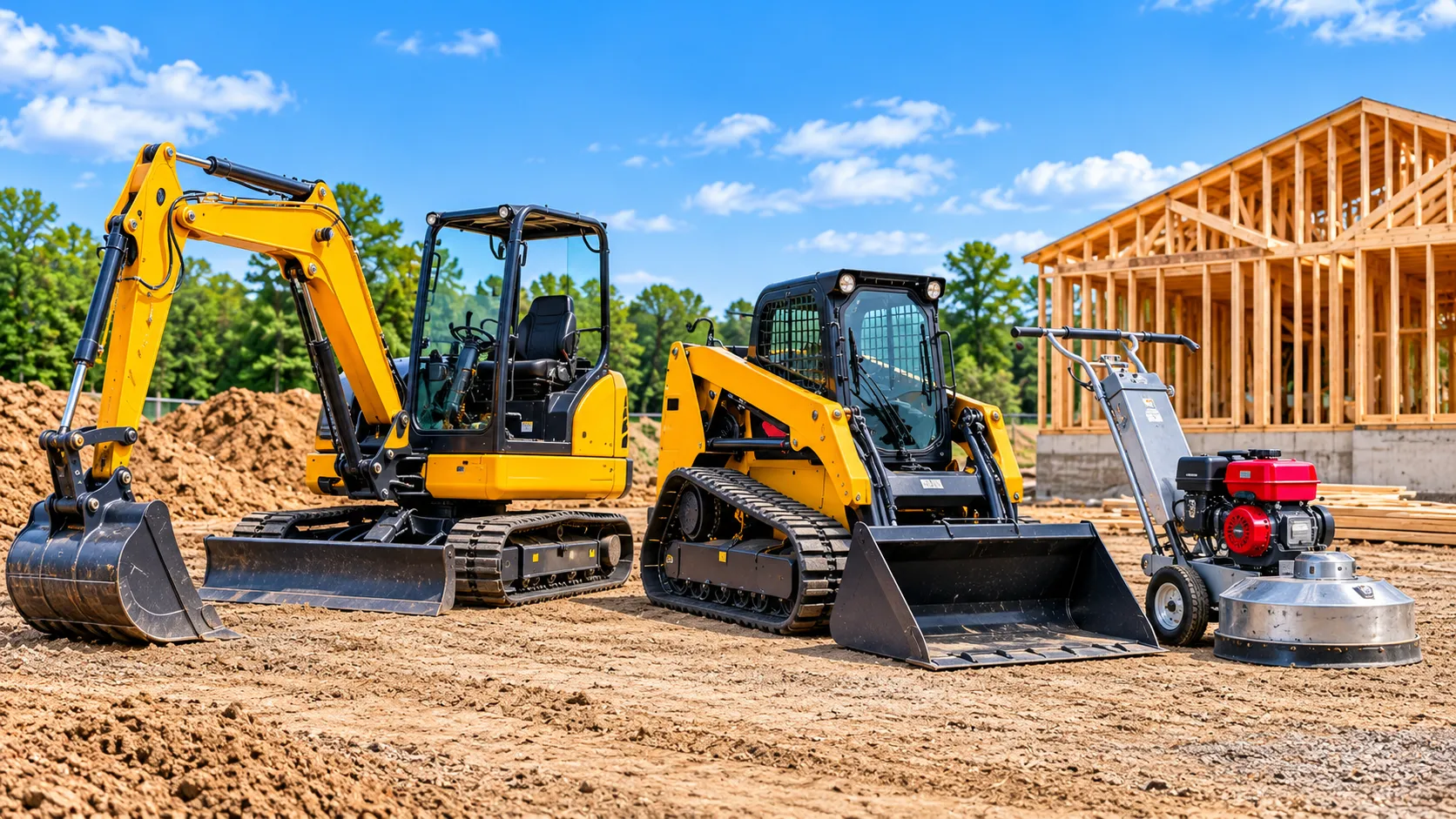
- Mini excavators are useful for digging, trenching, and removing soil.
- Track mini skid steers help move materials through smaller working areas.
- Concrete grinders are useful for smoothing and preparing concrete surfaces.
- Augers can make digging holes for fence posts and landscaping projects easier.
- Dump trailers can help transport soil, debris, and construction materials.
A track mini skid steer can be especially useful when your project involves moving materials around residential properties, landscaping areas, or spaces where larger machines may be difficult to operate.
Consider Equipment Size, Power, and Working Space
Before booking equipment, measure gates, pathways, and other access points. Check the machine's width, operating weight, and working requirements.
Also consider the ground conditions.
Soft soil, uneven surfaces, slopes, and wet areas can affect how safely and efficiently a machine operates. Choosing equipment that fits the site can save you from unnecessary problems once the rental arrives.
3. Create a Rental Schedule That Saves Time
Once you know which machines you need, create a simple rental schedule.
The biggest mistake people make is renting every machine at the beginning of the project, even when some equipment will not be needed for several days.
This can increase rental costs without improving productivity.
Instead, organize your equipment according to the project stages.
For example, consider this four-day schedule:
| Project day | Main work | Equipment needed |
|---|---|---|
| Day 1 | Digging and ground preparation | Mini excavator |
| Day 2 | Moving soil and materials | Skid steer |
| Day 3 | Surface preparation | Concrete grinder |
| Day 4 | Final cleanup | Dump trailer |
This is only an example. Your actual schedule will depend on the project size and working conditions.
Try to arrange equipment so that one task is completed before the next machine arrives. This keeps your work area organized and reduces unnecessary rental time.
If two machines are needed at the same time, plan their delivery together when possible.
4. Plan Equipment Delivery and Pickup in Advance
Equipment delivery is another important part of a multi-day rental plan.
You do not want workers standing around waiting for a machine that was supposed to arrive in the morning. Similarly, you do not want rented equipment sitting unused because the work area is not ready.
Before confirming your rental, discuss the expected delivery and pickup arrangements.
Consider these points:
- Confirm the delivery date and expected time.
- Make sure someone is available to receive the equipment.
- Prepare enough space for unloading.
- Keep access roads and driveways clear.
- Confirm pickup arrangements before the rental period ends.
If you are working on a residential property, check for overhead wires, narrow driveways, parked vehicles, and other possible obstacles.
For projects in Franklin and surrounding Middle Tennessee communities, arranging delivery ahead of time can make equipment planning much easier.
5. Prepare for Weather Delays and Unexpected Changes
Even a well-planned construction project can face unexpected problems.
Rain can make soil difficult to work with. A delayed material delivery can stop progress. Sometimes, a task simply takes longer because the ground conditions are different from what you expected.
That is why your rental schedule should include some flexibility.
Instead of planning every hour around a fixed deadline, allow extra time for important tasks.
For example, if excavation is expected to take one day, consider whether you have enough flexibility if the soil is harder than expected.
You should also keep an eye on the weather forecast before scheduling outdoor work.
A few simple preparations can help:
- Check weather conditions before the rental begins.
- Keep materials ready before equipment arrives.
- Avoid scheduling several major tasks too closely together.
- Have a backup plan for unexpected delays.
- Communicate schedule changes with your rental provider.
Remember, a flexible plan is usually more useful than a perfect-looking schedule that cannot handle delays.
6. Calculate Your Rental Costs Before Starting
Rental costs can add up quickly when a project lasts several days.
The daily rental price is important, but it should not be the only thing you consider. Delivery charges, pickup fees, rental duration, attachments, and damage waiver costs may also affect your total budget.
Before booking, ask for a clear estimate.
For example, compare the cost of renting a machine for three separate days with the cost of a weekly rental. Depending on the provider's pricing, a longer rental period may offer better value.
You should also consider whether you actually need each machine for the entire rental period.
A simple cost checklist includes:
- Daily or weekly rental rates.
- Delivery and pickup charges.
- Required attachments.
- Damage waiver or other applicable fees.
- Fuel and operating expenses.
- Additional rental days if the project runs late.
Do not choose equipment based on the lowest advertised price alone. A machine that is too small for the job could increase labor time and make the project more expensive overall.
7. Check Equipment Before and After Each Workday
Once your equipment arrives, take a few minutes to inspect it before starting work.
Check the machine for visible damage, fluid leaks, loose parts, and any obvious operating problems. Make sure you understand the basic controls and safety instructions.
If something does not look right, contact the rental provider before using the machine.
At the end of each workday, take a few additional steps:
- Park the equipment in a safe, level area.
- Follow the machine's shutdown instructions.
- Remove loose debris where appropriate.
- Check for visible damage.
- Secure the machine against unauthorized use.
- Keep keys and accessories in a safe place.
If you plan to rent concrete grinder equipment for surface preparation, also make sure you understand the correct grinding attachments, dust-control requirements, and protective equipment needed for the job.
Good equipment care helps prevent avoidable problems and makes the next working day easier.
Conclusion
Planning equipment rentals for a multi-day project does not have to be difficult. Start by breaking your project into smaller tasks, choosing machines that match the work, and creating a realistic rental schedule. Then organize delivery, calculate the total cost, and leave some room for unexpected delays.
Whether you are handling landscaping, concrete preparation, property improvements, or construction work, having the right equipment at the right time can make a big difference.
At Falcon Equipment Rentals, contractors, builders, homeowners, and landscapers can explore equipment rental options for different project needs in Franklin, TN, and surrounding Middle Tennessee areas. A little planning before the first workday can help you save time, manage costs, and keep your project moving in the right direction.
Frequently Asked Questions
1. How far in advance should I book equipment for a multi-day project?
It is a good idea to arrange equipment several days before your project starts. For larger jobs or projects requiring multiple machines, booking earlier can help you organize delivery and avoid availability issues.
2. Is weekly equipment rental cheaper than daily rental?
It depends on the rental provider's pricing. Weekly rentals can offer better value when you need equipment for several consecutive days. Always compare the total daily and weekly costs before booking.
3. Should I rent all project equipment at the same time?
Not necessarily. If different machines are needed for different project stages, scheduling them separately may help reduce rental costs. However, if multiple machines are required together, arranging their delivery at the same time can save effort and improve coordination.